Median Year-1 federal savings: $21,886 · IQR $20,886–$26,969

Chicago, IL cost segregation: what 5 representative properties actually produce

Engine-derived ROI benchmarks for Chicago-area short-term rentals, single-family rentals, and small commercial properties. Numbers come from running real fixtures through the Cost Seg Smart engine, same engine that produces your actual study. Studies from $495.

Operated by Cost Seg Smart. Studies are IRS-aligned with engineer review included. 5 fixture benchmarks computed May 2026.

The Chicago numbers, distilled

$21,886
Median Year-1 federal savings (100% bonus, 37% bracket)
Interquartile range: $20,886 – $26,969
16.0%
Median reclassification ratio
IQR: 15.8% – 17.4% · Full range: 11.9% – 17.6%
24.7%
Median land allocation
IQR: 23.2% – 26.5%
5
Representative fixtures
Spanning 5 Chicago sub-markets

Numbers above are engine-estimated outputs from running 5 representative fixtures, not promises about what your specific property will produce. Results vary based on actual property condition, year built, renovation history, county assessor data quality, and rental treatment (STR vs LTR). Full per-fixture table, neighborhood breakdown, and downloadable CSV/PDF on the Chicago cost seg benchmarks page.

Why Chicago is different

Chicago's cost-seg picture has two layers: a clean federal-acceleration story under OBBBA's restored 100% bonus depreciation, and a more complex Illinois state-side picture that's frequently misrepresented elsewhere. Illinois is not fully conforming on federal §168(k). The Illinois Income Tax Act (35 ILCS 5/203) requires addition modifications for federal bonus depreciation with subsequent subtraction modifications that recover the deduction across multiple Illinois tax years, your federal Year-1 cash captures cleanly, but the Illinois-side benefit is spread rather than fully accelerated. A Chicago investor taking $80,000 of accelerated reclassification at the 37% federal bracket captures $29,600 of Year-1 federal cash, with the Illinois-side $3,960 total benefit spread over multiple state tax years rather than concentrated in Year 1. The federal benefit is real; the Illinois timing math is more complex than a simple flat-rate calculation suggests.

The bigger practical constraint on Chicago cost-seg is the regulatory STR environment. Chicago's Shared Housing Ordinance restricts short-term rental operations to registered hosts with significant compliance requirements, limits on density, and restrictions on whole-unit non-primary-residence STR. Most cost-seg-relevant Chicago property operates as long-term rental, pre-war SFR fix-and-flip in Lincoln Park, Bucktown, and Wicker Park; two-flat and three-flat small-multifamily acquisitions in Logan Square, Avondale, and Pilsen; downtown-adjacent condo rental in South Loop and West Loop; and suburban Cook County SFR rental in Oak Park and Evanston (outside Chicago city jurisdiction).

The structural cost-seg case is unusually strong on Chicago two-flats and three-flats. The 1890s–1920s small-multifamily stock in Logan Square, Avondale, Pilsen, and Bridgeport typically features multiple FF&E packages per building (each unit has its own kitchen, bathrooms, appliances), shared-system depreciation considerations (boiler, electrical service, structural masonry), and substantial post-2000 renovation cost pools. Engine reclassification ratios on pre-war two-flat and three-flat acquisitions can run 24–32% when the property has well-documented post-2010 renovation, among the higher LTR ratios in our network, though individual results vary based on specific renovation history and property condition.

Illinois state tax position: Illinois generally follows federal MACRS rules but is NOT fully conforming on federal §168(k) bonus depreciation. The Illinois Income Tax Act requires addition modifications for federal bonus depreciation, with subsequent subtraction modifications that recover the deduction over multiple Illinois tax years rather than concentrating it in Year 1. For 2025+ acquisitions under OBBBA's 100% federal bonus, the federal §168(k) acceleration captures cleanly in Year 1, but the Illinois-side benefit is spread across multiple years rather than fully accelerated. Verify current-year Illinois treatment with your CPA; IL bonus depreciation conformity has been adjusted multiple times in recent years and continues to evolve through 2026 legislation.

Decoupling: Illinois has historically required IL Schedule M addition modifications for federal bonus depreciation, with corresponding subtraction modifications recovering the deduction over future Illinois tax years. Model federal and Illinois treatment separately, they do not match year-by-year even when the total deduction is equivalent over the property's holding period.

Verify with your CPA. State tax conformity rules for federal §168(k) bonus depreciation are adjusted frequently, multiple states have modified their treatment two or more times in the past decade. The general framing on this page reflects our understanding as of May 2026, but you should always verify current-year treatment with a qualified CPA or tax attorney before relying on specific dollar projections for your situation.

Engine outputs: 5 Chicago fixtures

These aren't rough estimates. Each fixture was run through the same engine that produces your actual study, RSMeans 2024 base costs, BLS PPI time index, county assessor land allocation, IRS Pub. 946 / Rev. Proc. 87-56 MACRS classification, 100% bonus depreciation per OBBBA.

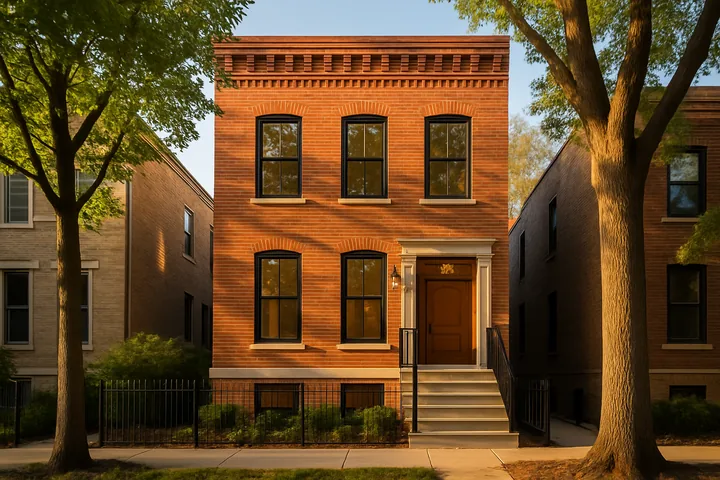
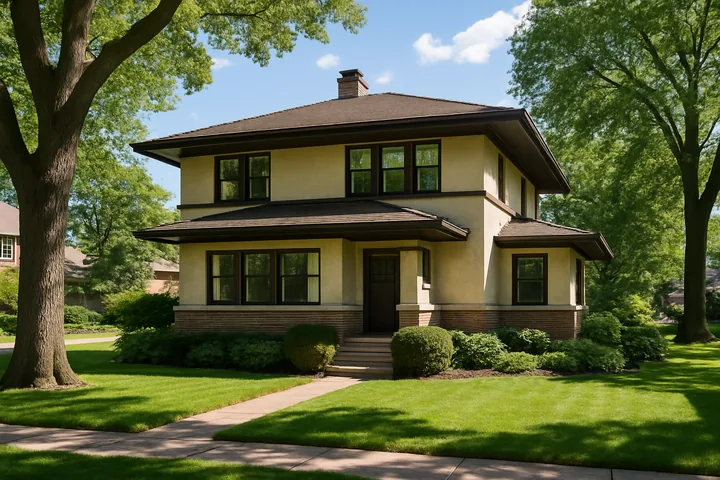
Illustrative Lincoln Park Bucktown Chicago renovated SFR

Lincoln Park SFR Flip

$29,720
Year-1 federal savings @ 37% bracket, 100% bonus
Purchase price$685,000
Depreciable basis$503,338
Land allocation26.5%
5-year reclassified$44,233
15-year reclassified$36,093
Total reclass16.0%
Lincoln Park / Bucktown / Wicker Park · SFR · Built 1908
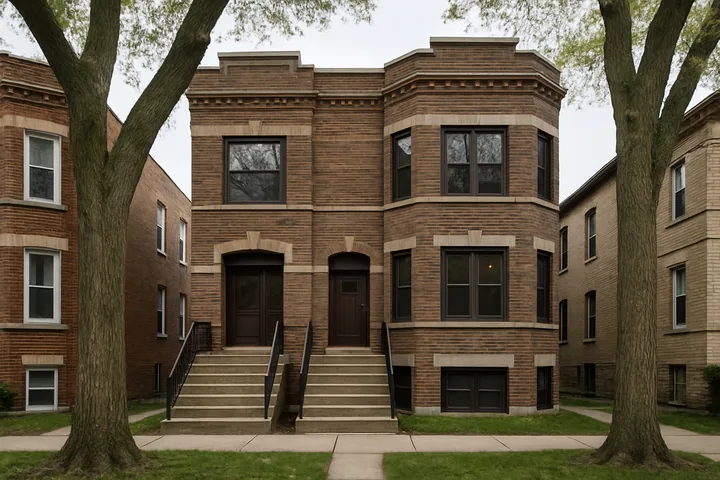
Illustrative Logan Square Chicago pre-war two-flat

Logan Square Two-Flat Investor

$26,969
Year-1 federal savings @ 37% bracket, 100% bonus
Purchase price$545,000
Depreciable basis$418,778
Land allocation23.2%
5-year reclassified$42,323
15-year reclassified$30,567
Total reclass17.4%
Logan Square / Avondale · DUPLEX · Built 1922
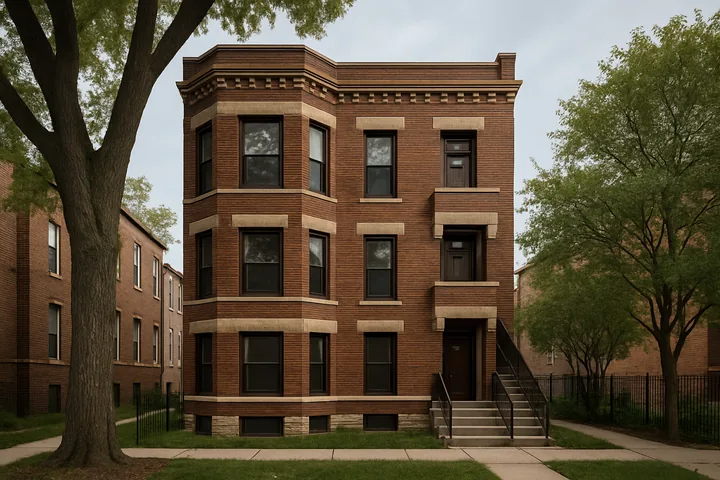
Illustrative Pilsen Chicago 1890s three-flat

Pilsen Three-Flat BRRRR

$20,886
Year-1 federal savings @ 37% bracket, 100% bonus
Purchase price$425,000
Depreciable basis$320,195
Land allocation24.7%
5-year reclassified$36,340
15-year reclassified$20,108
Total reclass17.6%
Pilsen / Bridgeport (Lower West Side) · TRIPLEX · Built 1898
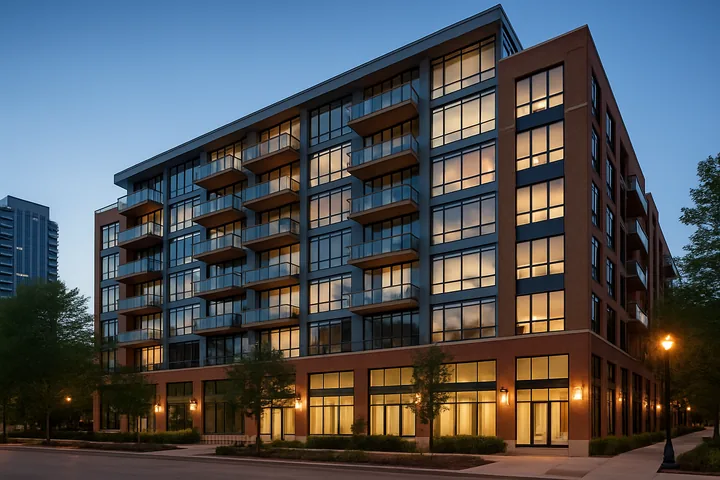
Illustrative South Loop Chicago mid-rise condominium

South Loop Condo Rental

$15,469
Year-1 federal savings @ 37% bracket, 100% bonus
Purchase price$685,000
Depreciable basis$349,889
Land allocation48.9%
5-year reclassified$38,381
15-year reclassified$3,428
Total reclass11.9%
South Loop / West Loop (downtown-adjacent condo) · CONDO · Built 2014
Illustrative Oak Park suburban Cook County SFR rental

Oak Park Suburban SFR LTR

$21,886
Year-1 federal savings @ 37% bracket, 100% bonus
Purchase price$485,000
Depreciable basis$373,159
Land allocation23.1%
5-year reclassified$31,321
15-year reclassified$27,829
Total reclass15.8%
Oak Park / Evanston (suburban Cook County) · SFR · Built 1925

Deep dive on each example →

Chicago neighborhood profiles

Cost-seg ROI varies more by neighborhood than by city. Chicago's 5 sub-markets each have their own land-allocation pattern and property archetype:

NeighborhoodTypical valueTypical land allocationProfile note
Lincoln Park / Bucktown / Wicker Park $685,000 ~30% Pre-war 1890s–1920s SFR and two-flat stock heavily renovated. Higher land allocation due to neighborhood-scarcity premium. Mix of fix-and-flip and small-MF investor activity.
Logan Square / Avondale $545,000 ~26% Two-flat, three-flat, and small-multifamily dominant. Mid-tier land allocation. Active small-MF investor market with heavy post-2010 renovation activity.
Pilsen / Bridgeport (Lower West Side) $425,000 ~22% 1890s-1920s small-MF and SFR stock. Lower-cost entry point. Strong fix-and-flip and BRRRR activity. Lower land allocation.
South Loop / West Loop (downtown-adjacent condo) $685,000 ~32% Post-2010 mid-rise and high-rise condo dominant. Higher land allocation reflecting downtown-adjacent premium. New construction with cleaner reclassification ratios.
Oak Park / Evanston (suburban Cook County) $485,000 ~24% Suburban Cook County SFR rental market. Strong year-round LTR cash flow. Mid-tier land allocation. Outside Chicago STR ordinance jurisdiction.

Methodology note: "Typical land allocation" reflects baseline patterns for the sub-market. For ultra-premium or resort-tier inventory where reconstruction cost exceeds 2.0× the implied depreciable basis after subtracting baseline land, the engine applies a premium land floor (~50%) to keep the study within audit-defensible territory. This means individual fixture engine output may exceed the neighborhood typical, especially for resort-tier ski-in/ski-out, beachfront, or view-premium product where land scarcity dominates value. See the /data/ page for per-fixture land-source attribution. Results vary substantially by specific property condition, renovation history, and assessor records.

Regulatory context

Chicago Shared Housing Ordinance restricts short-term rental operations within City of Chicago limits, STR registration is required, density caps apply in certain residential zones, and whole-unit non-primary-residence STR operation is largely prohibited. Suburban Cook County, DuPage County, Lake County, and Will County operate distinct regulatory regimes, some more permissive than Chicago proper. For STR-intent buyers, jurisdictional verification matters more than the cost-seg study itself. For LTR investors (the dominant cost-seg-relevant Chicago segment), standard §469 passive-loss rules apply, and real-estate-professional status under §469(c)(7) is the typical path for high-volume operators wanting W-2 offset. The federal §168(k) acceleration captures Year-1 cleanly; the Illinois state-side benefit is spread across multiple tax years per IITA modification rules rather than concentrated in Year 1, model both treatments separately in your CPA workflow.

For the full IRS-rule reference layer (§168(k), §469 material participation, state conformity), see irsdepreciationrules.com, our open reference site.


Chicago cost segregation FAQ

Does Illinois conform fully to federal §168(k)?

No, and this is one of the most commonly misrepresented points about Illinois state tax treatment. While Illinois starts state taxable income from federal taxable income and applies the flat 4.95% rate, the Illinois Income Tax Act (35 ILCS 5/203) requires addition modifications for federal bonus depreciation with subsequent subtraction modifications. The practical effect: your federal §168(k) acceleration under OBBBA's 100% bonus captures cleanly in Year 1 on the federal return, but Illinois requires the state-side acceleration to be spread across multiple Illinois tax years rather than concentrated in Year 1. The total Illinois benefit over the property's holding period equals what full conformity would produce, but the timing differs. Verify current-year Illinois treatment with your CPA, IL bonus depreciation rules have been adjusted multiple times in recent years. This makes Illinois materially less attractive than fully-conforming states (Colorado 4.40%, Utah 4.65%) for Year-1 cash, though the total federal-plus-state benefit over the hold period is similar.

Can I run a Chicago property as a short-term rental?

Generally not in Chicago city limits in any way that supports the typical absentee §469 STR-loophole strategy. Chicago's Shared Housing Ordinance requires STR registration, restricts non-primary-residence absentee whole-unit STR operation, and imposes density caps in many residential zones. Adjacent suburban Cook County jurisdictions (Oak Park, Evanston, Skokie) and DuPage County (Naperville, Wheaton, Downers Grove) operate distinct STR regimes, some more permissive. For Chicago-resident investors specifically wanting §469 STR-loophole treatment, the practical path is to acquire property in adjacent permissive jurisdictions or pivot strategy to LTR + real-estate-professional status.

Why do Chicago two-flat and three-flat reclassification ratios run unusually high?

Three compounding factors. (1) Multiple FF&E packages: a two-flat has two of every kitchen, two of every bath, two of every appliance set; a three-flat triples that. The 5-year personal property pool scales with unit count. (2) Shared-system depreciation: boilers, central electrical service, original tin or slate roof, structural masonry shells, different MACRS treatments than single-SFR systems. (3) Pre-war Chicago two-flat and three-flat stock (1890s–1920s) typically has substantial post-2000 renovation cost layered onto the original masonry shell, and renovation cost-seg is where the heaviest 5/15-year work happens. Engine reclass for a Logan Square pre-war two-flat typically runs 24–30%, vs 16–18% for a single suburban SFR in Oak Park or Evanston.

Is the cost-seg case stronger for Chicago small-multifamily or for downtown condo rental?

Small-multifamily wins on reclass-as-percent-of-purchase. Pre-war Chicago two-flats and three-flats in Logan Square, Avondale, Pilsen, and Bridgeport run 24–32% reclassification ratios because of the multi-unit FF&E + renovation pool dynamic described above. Downtown South Loop and West Loop condos run 18–22%, lower because of higher land allocation (32%) reflecting downtown-adjacent premium and cleaner post-2010 new construction without the renovation pool dependency. Absolute dollar deductions are larger on the small-multifamily because basis is larger per total transaction ($425K–$685K for two-flat/three-flat vs $485K–$685K for single condo). For BRRRR portfolio operators, small-multifamily is the typical optimal target.

Does the City of Chicago Shared Housing Ordinance restriction matter much for LTR investors?

Not directly, the ordinance applies to STR operations, not long-term rental. LTR investors in Chicago operate under standard §469 passive-loss rules. The §469 STR-loophole that converts passive losses to active deductions doesn't apply to LTR property anywhere, so Chicago's STR restriction doesn't change the LTR cost-seg math. What matters for LTR investors is whether they can use cost-seg passive losses against passive rental income from other holdings, or whether they qualify as real-estate professionals under §469(c)(7) to convert losses to active W-2 offset. For high-volume Chicago BRRRR operators with 5+ properties, real-estate-professional status is typically achievable.

More general cost-seg questions answered at costsegsmart.com/faq/.

Ready to run your Chicago study?

Cost Seg Smart studies are IRS-aligned, engineering-reviewed, and include written audit defense. Pricing is transparent and starts at $495 for residential properties under $300K, full pricing on the main site.